Thursday, 2 April 2020
Waiting
There's a disconcerting maze of upturned supermarket trolleys at the end of the car park, providing a combination of guidance and protection for waiting customers. I'm queuing in the fresh spring sunshine, money in my bank account; through the shop window I can see food on the shelves, staff inside wiping every shiny surface with sanitiser. Things could be much worse. And yet the man in front of me is coughing. He's a good three metres away, but is that enough? I'm pretty sure I can smell his aftershave, so I'm probably breathing the same air. The woman behind me is much closer. Too close. Might she sneeze on the back of my head? Would it matter, as long as I don't clean my neck with my lizard tongue? We shuffle forwards whilst maintaining our distances. As I reach the front door, I'm met by a security guard wearing a fluorescent waistcoat and a ginger beard. "You alright?", he asks casually, desperately hoping I'm not going to answer anything other than "yeah, good, thanks". "Yeah, good, thanks", I reply. He nods. I've passed the test. A grey-haired woman leaves the shop carrying two large bags, uncomfortable with her success. The guard makes an exaggerated gesture of welcome; I take a deep breath and walk forward.

Sunday, 29 March 2020
Furlough
Furlough. It's become a verb - doesn't everything, eventually? - but originally was a noun used when military personnel were granted time away from their work, often to attend to important personal matters. Usage spread to missionaries, prisoners and government workers before reaching everyone else. The English word first appeared in the 17th century, having migrated from the Dutch verlof. Until recent months, the contemporary meaning usually referred to organisations temporarily sending their staff home without pay until economic conditions improved. Now it's a key word in the UK government's support package for businesses that have been badly affected by the current coronavirus outbreak.
Sunday, 10 November 2019
Emma Watson, Normality and The Observer
Did you hear about Emma Watson? Apparently she's failing to be 'normal' in a fantasy world, whatever that means. Those are the words of The Observer, offering clickbait comment wrapped up as concerned advice from a friend you didn't want. Disappointingly, it's as happy to feast on Ms Watson's fame as the tabloids.
The Observer's article starts with a quote from actor Helen McCrory. "So often when you meet child actors they're weird, they're freaks. No, I mean it, they're really odd people", she's quoted as saying. The original ITN interview continues "because they have a very weird life that as an adult you can just about get your head around".
Who's she talking about? Well, it's something she said eight years ago to endorse Asa Butterfield, who'd just co-starred with her in the film Hugo. "For a child to go through that and not end up very strange is really exceptional, and he's managed it."
There's no apparent reason to assume this is a snide reference to anyone specific, let alone Emma Watson, who'd been seventeen when she'd filmed Harry Potter and the Half-Blood Prince with McCrory, but that's what this article does. And then it builds on this assumed strangeness by throwing in the slyly pejorative 'precocious daughter of two divorced lawyers'.
Okay, being chosen as a child to audition for a film role is unusual. But 'strange'? I'm not sure. Graduating from university is apparently also an indicator of her strangeness, as is campaigning for gender equality. The article talks of Watson as 'an earnest believer in the ability to use her fame for good' but that's not enough for The Observer. 'Her controversial comments about ‘self-partnering’ may not have helped her', the paper says. It doesn't want to judge, of course, which is why there's a slippery 'may not' in there. It's the OTHER media that's been judging - The Observer handily provides a list - but not THIS newspaper. Except, well, it can't resist a bit of sarcasm. 'By apparently looking to reinvent an identity hitherto explained by the drably last-century concept of being, say, “happily single”, Watson said that “self-partnering” was a state that she had reached.'
Riiight. A hyphenated construct rather than two separate words. That's what this is all about. A repurposed quote, a list of other people's complaints, attacking Emma Watson without being seen to lay a finger on her, plausible deniability. Oops, no, not plausible deniability. The Observer goes on to nail its colours to the mast: Watson is 'indelibly sensitive and prone to navel-gazing'. Unfair, I say. The sensitivity is hardly surprising, given the behaviour of elements of the media, whilst the navel-gazing accusation is the inevitable result of being expected to explain yourself in every interview. Even if it's true, none of this justifies commissioning an article for a national newspaper.
Watson's often found herself 'a target for cruelty, rather than sympathy', the paper tells us. Indeed so. In fact, the article is a perfect example. How very meta. Criticism speckled with fragments of faux concern, sentences plucked from other people's interviews and a punchline that says she should 'try to learn and do better'.
She's doing very much better than I would have done in the same circumstances, I think. And showing a better example than the newspaper column, too.
Sunday, 3 November 2019
Rocket FM Lewes: 'Talking Culture' 3rd November 2019
In this week's 'Talking Culture' show on Rocket FM Lewes my guests were:
business author Sam Knowles
glass artist Claudia Wiegand
Jonathan Brown, who's organised the Lewes Festival of Solo Theatre
and novelist Beth Miller.
glass artist Claudia Wiegand
Jonathan Brown, who's organised the Lewes Festival of Solo Theatre
and novelist Beth Miller.
The music I played was:
Taylor Swift: Our Song
Gilbert O'Sullivan: What's In A Kiss
Sarah McLachlan: Fallen
The Dead End Kids: Have I The Right
The Whitlams: Your Daddy's Car
James Taylor: Fire and Rain
Chris de Burgh: Lonely Sky
Imelda May: Tainted Love
Jill Sobule: Almost Great
Gilbert O'Sullivan: What's In A Kiss
Sarah McLachlan: Fallen
The Dead End Kids: Have I The Right
The Whitlams: Your Daddy's Car
James Taylor: Fire and Rain
Chris de Burgh: Lonely Sky
Imelda May: Tainted Love
Jill Sobule: Almost Great
Sunday, 27 October 2019
Rocket FM Lewes: 'Talking Culture' 27th October 2019
I've been invited back to present another series of 'Talking Culture' shows on Rocket FM Lewes.
My guests on this week's programme were:
playwright Philip Ayckbourn
writer Michelle Porter
artist Keith Pettit
The music I played was:
Badly Drawn Boy: You Were Right
Delta Goodrem: Lost Without You
Simon and Garfunkel: A Hazy Shade Of Winter
Barbra Streisand / Josh Groban: All I Know Of Love
Bay City Rollers: Give A Little Love
Patsy Gallant: From New York to L.A.
Mary Chapin Carpenter: I Feel Lucky
Harold Melvin and the Blue Notes: Don't Leave Me This Way
Co-Co: Bad Old Days
The Wonder Stuff: The Size Of A Cow
The Reform Club: Endless Faithless
Linda Thompson: I Want To See The Bright Lights Tonight
Sunday, 15 September 2019
Sunday, 8 September 2019
Rudolf Bing at Glyndebourne
In 1934, Rudolf Bing was an experienced opera house manager who had recently lost his job in Germany as Nazi influence grew.
"The next couple of months were the darkest I knew", he later wrote in his autobiography '5000 Nights at the Opera'. But then he received "a most remarkable commission" from conductor Fritz Busch.
He was invited to help organise John Christie's new Mozart opera festival at Glyndebourne. Christie had built an opera house on his estate, contacting Fritz Busch who, in turn, had insisted he worked with artistic director Carl Ebert. Ebert and Busch organised some of the principal singers before approaching Bing to employ the rest of the performing company.
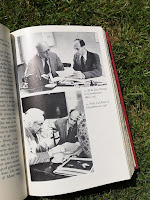 "Everything about this enterprise seemed crazy", wrote Rudolf Bing Working from his home in Vienna, he "managed to interest some excellent artists in the Glyndebourne project, largely, of course, because it involved working with Busch and Ebert". As the season approached, Rudolf Bing wanted to learn more about this curious English opera house. In May 1934 he decided to go on his own - "nobody said anything about paying my expenses" - leaving home in Vienna with his wife Nina, who stayed temporarily with her family in Paris while Rudolf took a ferry to Newhaven.
In his book, Rudolf Bing paints a vivid picture of those early days at Glyndebourne - and his later time as General Manager of the Metropolitan Opera in New York. He talks of John Christie, his colleagues, the house and Christie's butler Childs. "On one of the first occasions that I was an overnight guest at Glyndebourne, Childs woke me with that abominable English custom, the early-morning tea, and said 'Breakfast is at eight-thirty, sir.' I said 'Good morning, Childs. What time is it now?' 'Nine o'clock, sir', he said."
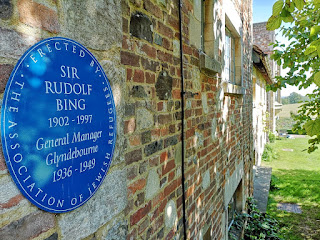
A blue plaque remembering Sir Rudolf Bing can be found overlooking the Glyndebourne lawn, just round the corner from the box office.

"The next couple of months were the darkest I knew", he later wrote in his autobiography '5000 Nights at the Opera'. But then he received "a most remarkable commission" from conductor Fritz Busch.
He was invited to help organise John Christie's new Mozart opera festival at Glyndebourne. Christie had built an opera house on his estate, contacting Fritz Busch who, in turn, had insisted he worked with artistic director Carl Ebert. Ebert and Busch organised some of the principal singers before approaching Bing to employ the rest of the performing company.
 "Everything about this enterprise seemed crazy", wrote Rudolf Bing Working from his home in Vienna, he "managed to interest some excellent artists in the Glyndebourne project, largely, of course, because it involved working with Busch and Ebert". As the season approached, Rudolf Bing wanted to learn more about this curious English opera house. In May 1934 he decided to go on his own - "nobody said anything about paying my expenses" - leaving home in Vienna with his wife Nina, who stayed temporarily with her family in Paris while Rudolf took a ferry to Newhaven.
In his book, Rudolf Bing paints a vivid picture of those early days at Glyndebourne - and his later time as General Manager of the Metropolitan Opera in New York. He talks of John Christie, his colleagues, the house and Christie's butler Childs. "On one of the first occasions that I was an overnight guest at Glyndebourne, Childs woke me with that abominable English custom, the early-morning tea, and said 'Breakfast is at eight-thirty, sir.' I said 'Good morning, Childs. What time is it now?' 'Nine o'clock, sir', he said."
A blue plaque remembering Sir Rudolf Bing can be found overlooking the Glyndebourne lawn, just round the corner from the box office.


Subscribe to:
Posts (Atom)