I'm reading Independence Day at the moment; quite slowly, because it doesn't really suit being a 'bedtime book'. Anyway, here's one of my favourite paragraphs so far:
Joe may be verging on a major disorientation here - a legitimate rent in the cloth. This actually appears in textbooks: Client abruptly begins to see the world in some entirely new way he feels certain, had he only seen it earlier, would've directed him down a path of vastly greater happiness - only (and this, of course, is the insane part) he inexplicably senses that way's still open to him; that the past, just this once, doesn't operate the way it usually operates. Which is to say, irrevocably.
From Independence Day by Richard Ford.
Tuesday, 6 October 2009

Saturday, 3 October 2009
Re-writes
"Re-write it", he says. "I want colour," he says, "I want drive and beauty and humble, human warmth and ecstasy, and all the tender, sad emotion of your sweet womanly heart, " he says, "and I want it in fifteen words."
From The Space Merchants by Frederik Pohl & C.M.Kornbluth
From The Space Merchants by Frederik Pohl & C.M.Kornbluth
Monday, 14 September 2009
Not 99 problems, just one
It's six years since Jay-Z's The Black Album was released. So I'm sure I'm not the first person to say this but, dearie me, what's the point of BBC Radio 1 playing "99 problems" - of which the key message is "I got 99 problems but a bitch ain't one" - in a 'clean' version that removes the word "bitch"? Not even the entire word in some instances, just the first bit (if you'll forgive the pun). It's pretty damn obvious there's a word missing - and it doesn't take a lexicographer to work it out. Kanye West sang "heard they'd do anything for a Klondike; well, I'd do anything for a blonde..." That's clearly not another choc ice reference. What’s next for the daytime playlist - "k the pain away"? Once upon a time, bands would include an alternative line - "she'll grab your Sandra Bullocks" is better than the original, I think - but that seems to be too much trouble now.
There's a school of thought that says words are neither bad nor good. Much like guns and dogs, it's the owners who are the problem. I'm inclined to agree, although I'd be less worried by someone waving a dictionary around than by either of the two other options. My point is that the message is either likely to be offensive or it isn't. Either play the whole thing or not at all.
I was only reminded about the Radio 1 incident and my latent annoyance when I was flicking through The Guide (The Guardian's entertainment listings) this weekend. There's an ad for a band called what at first glance looks like "FACK BUTTONS". On closer examination, the A is actually a star, reminiscent of the grawlix used in comics to denote swearing. On the pages either side are articles that mention the band's real name. Apparently it's a U, not an A. So this is a band that uses swearing in its name but isn't brave enough to print it, although the newspaper reviewing them doesn't have a problem. They don't look so clever now.
I enjoy wordplay. I don't mind some swearing. But I also like a bit of integrity. Now, where's my David Hasselhoff CD?
NB: Yes, I know "... Buttons", as Radio 1 probably calls them, have been around for several years. Yes, I'm sure it's the Buttons' record label that I should be blaming. And yes, I know I'm sounding a bit Meldrew again.
There's a school of thought that says words are neither bad nor good. Much like guns and dogs, it's the owners who are the problem. I'm inclined to agree, although I'd be less worried by someone waving a dictionary around than by either of the two other options. My point is that the message is either likely to be offensive or it isn't. Either play the whole thing or not at all.
I was only reminded about the Radio 1 incident and my latent annoyance when I was flicking through The Guide (The Guardian's entertainment listings) this weekend. There's an ad for a band called what at first glance looks like "FACK BUTTONS". On closer examination, the A is actually a star, reminiscent of the grawlix used in comics to denote swearing. On the pages either side are articles that mention the band's real name. Apparently it's a U, not an A. So this is a band that uses swearing in its name but isn't brave enough to print it, although the newspaper reviewing them doesn't have a problem. They don't look so clever now.
I enjoy wordplay. I don't mind some swearing. But I also like a bit of integrity. Now, where's my David Hasselhoff CD?
NB: Yes, I know "... Buttons", as Radio 1 probably calls them, have been around for several years. Yes, I'm sure it's the Buttons' record label that I should be blaming. And yes, I know I'm sounding a bit Meldrew again.
Wednesday, 9 September 2009
Sounds like Paris
An assortment of sound effects from a trip to Paris in August 2009. They include:
- The Ashford Eurostar terminal
- Eurostar train arriving
- Onboard the train
- Paris Eurostar terminal
- Paris Metro
- Street noise
- TV weather forecast
- More street noise
- Café
- Park
- Street musicians
- Street noise
- Another two groups of street musicians
- Inside the Pompidou Centre
- Protest march
- Cafe outdoors
- Walking through Jardin du Luxembourg
- Frog & Princess pub / football on TV
- Sacre Coeur interior
- Metro interior (including busker with accordian)
- Eurostar - pre departure announcement
- Onboard Eurostar message
Monday, 7 September 2009
What good has that done anyone?
In May this year I bought a camera. A nice little Samsung L313 from Argos. Catalogue number 559/1473 to its friends in the warehouse. 13.6 megapixels for £99.99. What a happy customer I was.
Alas, it went wrong after a couple of weeks. The controls would ‘freeze’ when you were using it and the only way to get it working again was to remove the battery for a moment.
I took it back to Argos and they replaced it. I was a happy customer once again. I liked Argos. I liked Samsung.
The second camera then developed an identical fault within three months. I took the camera back to Argos and told them what had happened. All I wanted was a replacement camera. Unfortunately my local Argos store wouldn’t do that. They wanted to send L313 off for a repair. Even when I suggested this wasn’t acceptable for a relatively new camera, their response was that their terms were within the law and that’s all they’d do.
Next, I wrote to Argos head office and told them my tale of woe. They wrote back to say they were sorry to hear of the problem but their terms were to repair faulty items if they were more than 30 days old and within 12 months of purchase.
So I headed for Her Majesty’s Courts Service online. £25 later and I’m taking Argos to court. Two weeks later and I receive a letter from the court telling me the defendant’s made a full admission. The next day a cheque for £99.99 plus £25 costs arrives. The day after that I get a letter from Argos telling me they’ve decided not to contest the matter.
What a waste of time and money. Argos is now £25 out of pocket… plus the time taken by head office staff to deal with the legal stuff… plus the wholesale cost of a faulty camera (which I still have in a drawer somewhere). I've spent at least a couple of hours chasing around and I no longer trust Argos.
Ultimately, no-one really wins. And that’s all a bit disappointing.
Alas, it went wrong after a couple of weeks. The controls would ‘freeze’ when you were using it and the only way to get it working again was to remove the battery for a moment.
I took it back to Argos and they replaced it. I was a happy customer once again. I liked Argos. I liked Samsung.
The second camera then developed an identical fault within three months. I took the camera back to Argos and told them what had happened. All I wanted was a replacement camera. Unfortunately my local Argos store wouldn’t do that. They wanted to send L313 off for a repair. Even when I suggested this wasn’t acceptable for a relatively new camera, their response was that their terms were within the law and that’s all they’d do.
Next, I wrote to Argos head office and told them my tale of woe. They wrote back to say they were sorry to hear of the problem but their terms were to repair faulty items if they were more than 30 days old and within 12 months of purchase.
So I headed for Her Majesty’s Courts Service online. £25 later and I’m taking Argos to court. Two weeks later and I receive a letter from the court telling me the defendant’s made a full admission. The next day a cheque for £99.99 plus £25 costs arrives. The day after that I get a letter from Argos telling me they’ve decided not to contest the matter.
What a waste of time and money. Argos is now £25 out of pocket… plus the time taken by head office staff to deal with the legal stuff… plus the wholesale cost of a faulty camera (which I still have in a drawer somewhere). I've spent at least a couple of hours chasing around and I no longer trust Argos.
Ultimately, no-one really wins. And that’s all a bit disappointing.
Friday, 21 August 2009
Enthusiasm is my enemy!
This article was originally published on TheFonecast.com
Enthusiasm is one of the great intangible powers of the world. It’s attractive, it’s compelling and sometimes it’s dangerous. And – yes, I’m going to try to keep this relevant – it sells mobile phones.
I was reminded of this the other day when I read a Sunday Times piece about Apple’s Steve Jobs. It wasn’t particularly sympathetic to Mr Jobs but it made mention of the “reality distortion field” that people often describe as surrounding him. That’s his enthusiasm – and it’s the enthusiasm that’s transformed Apple from a mere computer manufacturer into the company it is today. The Apple iPhone arrived in 2007, enthusing the so-called fanboy while also enticing millions of others to ditch their smartphones for the new Apple device.
It’s enthusiasm that's made the Apple iPhone – later the iPhone 3G and now the 3GS – a device that’s changing the way the mobile industry works. We may not like this… but we may not have much choice.
Despite the iPhone's popularity, the reasons not to like it are manifold. For example, many of the technical specifications aren’t as high as other current smartphones. Some of the iPhone’s features have lagged years behind other devices.
That’s one of the reasons I’ve not bought one myself. I had a Nokia 2110 back in 1995. I had a Nokia 7650 in 2002. I like cutting-edge – when it’s relevant to me – and I won’t upgrade just for the sake of changing my phone. (I’ve got a HTC TyTN II at the moment, since you ask). And yet I’m thinking about getting an iPhone.
Why? It’s that darned enthusiasm. It’s not affected me directly – but it’s affected other people. Developing software for different operating systems is expensive, as MoBank’s Steve Townend said in this week’s edition of The Fonecast. That’s why MoBank started with a single OS. If I want to use MoBank at the moment, I need an iPhone.
Now ipadio, which works with pretty much any mobile phone in the world, has created an iPhone application. I can still use ipadio from my current mobile… but if I want the extra features, I need an iPhone. Ocado. Google Earth. Amazon Kindle. All iPhone lovers. Of course, support for other operating systems may well follow, but who wants to wait?
So what’s going to save me from ending up with a mobile device I don’t really want? What's going to save me from needing a not-really cutting-edge device to run the latest software? (Now THAT'S ironic, Morissette).
Perhaps technology development. Maybe the next iPhone (or the Apple Tablet) will have a higher spec and a better keyboard experience, both of which are important to me. Perhaps we’ll start seeing more apps for Android. Or perhaps commercial reality will come to my rescue.
Strand Consulting has recently published a report that describes the iPhone as a mobile operator's worst friend. It points to Apple’s small market share and the high data usage it encourages on flat-rate tariffs. In fact, it reckons that no mobile operator in the world has increased its overall turnover, profit and market share due to selling the iPhone.
Enthusiasm’s difficult to beat. I’m a big fan – but not when it overwhelms reality. Perhaps it’s the accountants with their Symbian smartphones and their BlackBerry devices that’ll have the last word on the iPhone. Meanwhile, I’ll hang on to my HTC for a little longer… and maybe I’ll take a look at second-hand iPhones
Wednesday, 29 July 2009
25 years of dodgy coverage
In my last article for TheFonecast.com I looked forward to a world of cyborgs… but feared that decent battery life could stifle my dreams. And this week I’m on a similar theme, despairing that the UK’s mobile coverage problems probably won’t be solved before the Silver Jubilee of Vodafone and Cellnet’s networks.
To illustrate my worries, let me tell you a story. Once upon a time I worked for BT. “British Telecom” they called themselves then, before the shame of being a British telecommunications company caused them to change their name. And, as all British Telecom employees did, I signed the Official Secrets Act.
Fortunately, the information I’m about to disclose wasn’t passed to me in the course of my work – otherwise this could be the last opinion piece I wrote for a while.
When I started work at BT, they were – in simple terms – the UK’s telephone company. In reality that wasn’t true, because Kingston-upon-Hull had its own telecoms structure, Mercury Communications had recently been formed and System 4 carphones were available, but let’s overlook all that for the moment.
One of BT’s responsibilities, so I was told – this is the bit I was told outside work, your honour – was to make sure every town and village had telephone service. If a remote community or village didn’t have a property with telephone service, BT (or its predecessor, Post Office Telecommunications) would make sure there was a telephone box available. This may have been fiction or exaggeration, but it seemed perfectly plausible to me. Therefore, in case of emergency, there was a pretty darned good chance someone would be able to phone for help.
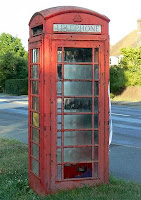
Fast-forward to 2009 and BT no longer has a monopoly on providing telephone service. The red telephone box is disappearing, with a number of local councils choosing to ‘sponsor’ an unprofitable local box for £500 a year – around half of the actual running costs – to prevent BT from removing them.
Yet there’s no true mobile replacement. Almost 25 years after the first cellular mobile phone call in the UK and I could still be stuck in a large number of UK locations without service from any of the country’s five networks. Worse still, rival networks won’t lift a finger to help. If I’m a Vodafone customer without coverage and there’s O2 service available, the networks will shrug apologetically. Even my handset joins in – taunting me with an on-screen “emergency calls only” message but not letting me make any.
Okay, so it’s all being fixed. To quote Ofcom’s consultation document from earlier this month: “We believe that now is the right time to look more closely at the nature of, and reasons for, the persistent 2G ‘not-spot’ problem as well as the state of mobile broadband coverage and work where appropriate to facilitate better coverage”. And emergency roaming could be in place by the end of the year if trials work out okay. But it’s still taken a quarter of a century.
To illustrate my worries, let me tell you a story. Once upon a time I worked for BT. “British Telecom” they called themselves then, before the shame of being a British telecommunications company caused them to change their name. And, as all British Telecom employees did, I signed the Official Secrets Act.
Fortunately, the information I’m about to disclose wasn’t passed to me in the course of my work – otherwise this could be the last opinion piece I wrote for a while.
When I started work at BT, they were – in simple terms – the UK’s telephone company. In reality that wasn’t true, because Kingston-upon-Hull had its own telecoms structure, Mercury Communications had recently been formed and System 4 carphones were available, but let’s overlook all that for the moment.
One of BT’s responsibilities, so I was told – this is the bit I was told outside work, your honour – was to make sure every town and village had telephone service. If a remote community or village didn’t have a property with telephone service, BT (or its predecessor, Post Office Telecommunications) would make sure there was a telephone box available. This may have been fiction or exaggeration, but it seemed perfectly plausible to me. Therefore, in case of emergency, there was a pretty darned good chance someone would be able to phone for help.

Fast-forward to 2009 and BT no longer has a monopoly on providing telephone service. The red telephone box is disappearing, with a number of local councils choosing to ‘sponsor’ an unprofitable local box for £500 a year – around half of the actual running costs – to prevent BT from removing them.
Yet there’s no true mobile replacement. Almost 25 years after the first cellular mobile phone call in the UK and I could still be stuck in a large number of UK locations without service from any of the country’s five networks. Worse still, rival networks won’t lift a finger to help. If I’m a Vodafone customer without coverage and there’s O2 service available, the networks will shrug apologetically. Even my handset joins in – taunting me with an on-screen “emergency calls only” message but not letting me make any.
Okay, so it’s all being fixed. To quote Ofcom’s consultation document from earlier this month: “We believe that now is the right time to look more closely at the nature of, and reasons for, the persistent 2G ‘not-spot’ problem as well as the state of mobile broadband coverage and work where appropriate to facilitate better coverage”. And emergency roaming could be in place by the end of the year if trials work out okay. But it’s still taken a quarter of a century.
This article was originally published on TheFonecast.com
Subscribe to:
Posts (Atom)