 But this isn't a review of Prawn on the Lawn. I wasn't making notes, mainly because I was enjoying the experience too much. Margot's was a Padstow landmark for over 20 years. Based on my visit, I'd say Prawn on the Lawn is guaranteed an equally long tenure here.
Sunday, 2 August 2015
The Prawn Supremacy
Prawn on the Lawn has recently appeared on Duke Street in Padstow, replacing the long-established Margot's Bistro. Much like the original PotL fish restaurant in London, Padstow's new seafood bar is also a fishmonger's shop, which means you could easily buy the main ingredients to re-create their dishes at home. Except... well, there'd be something missing. Because there's magic in the air here. The food is joyful. Simple in theory but, with apologies for the cliché, much more than the sum of its parts. We chose tapas-style dishes: seared tuna, razor clams, scallops and the open prawn sandwich that gives the place its name. All delightful.
 But this isn't a review of Prawn on the Lawn. I wasn't making notes, mainly because I was enjoying the experience too much. Margot's was a Padstow landmark for over 20 years. Based on my visit, I'd say Prawn on the Lawn is guaranteed an equally long tenure here.
But this isn't a review of Prawn on the Lawn. I wasn't making notes, mainly because I was enjoying the experience too much. Margot's was a Padstow landmark for over 20 years. Based on my visit, I'd say Prawn on the Lawn is guaranteed an equally long tenure here.

Wednesday, 22 July 2015
TRE 'gadget guru' technology for July 2015
The technology I talked about in July as ‘gadget guru’ for Talk Radio Europe is…
New Apple iPod
It seems that the iPhone and the iPad haven’t killed off the iPod. Apple has announced a new version of its iPod touch, with a new range of colours, improved cameras and the Apple A8 chip, which makes it more powerful and better at tracking your movement.
The 16GB model costs £159 or €229, depending on where you’re buying it.
Marshall London mobile phone
Amplifier maker Marshall – well, the part of the company that makes headphones – has said it’s going to make an Android-powered phone as well.
It’ll be called the Marshall London and, as you might expect, has a focus on music. There are two speakers on the front and there’s a separate music processor inside, which should improve the sound quality. It’s also capable of playing more types of music file than other devices. There’s a button on the top that takes you straight to your music and it’s got two headphone sockets to let you listen with a friend. In addition it has a decent stereo microphone in case you fancy doing your own recording.
Other specs include a 4.7-inch display, an 8 megapixel camera and 1.2GHz processor. It’s being made by a Swedish company called Zound, which has licensed the Marshall brand – and that explains why it’s being launched in Sweden.
Pricing is expected to be around €540 SIM-free when it goes on sale.
Coolpeds Briefcase Electric Scooter
When you’re tired and you’ve had a long flight, there can be nothing worse than dragging your suitcase through the airport – and then dragging it through the streets as well.
Now there’s an American company that reckons it might have solved the problem. Coolpeds makes electric scooters – and they’ve now taken that technology and built it into a suitcase. So instead of having a case with wheels that you drag behind you with the handle; a little platform folds down for you to stand on and you use the handle for steering.
It weighs about 7.9kg including the case, will run for up to 10km on one charge and can reach a speed of up to 20kph.
The price is currently $599 (around €550 or £385) – but is being promoted for less on crowd-funding site indiegogo.com.
FishHunter
This is described as a Military Grade Fish Finder Sonar that fits in your pocket. It’s about the size of a cricket ball – it’s round with a point sticking out of it – and it uses Bluetooth technology to connect to your phone, that’s the same wireless system as a hands free headset.
When it’s in the water it sends out high frequencies to work out the depth of the water, the temperature of the water, the contours of the bottom of the lake or wherever you’re fishing, if there’s any weed below the surface – and, most importantly, the location of any fish. All this then appears on the screen of your phone.
So – you switch on your phone, switch on the FishFinder, attach it to your fishing rod and cast it into the water. And because there’s GPS built in as well, you can tell it to remember your favourite spots.
It runs for up to 8 hours on rechargeable batteries and costs £129 (around €185)
New Apple iPod
It seems that the iPhone and the iPad haven’t killed off the iPod. Apple has announced a new version of its iPod touch, with a new range of colours, improved cameras and the Apple A8 chip, which makes it more powerful and better at tracking your movement.
The 16GB model costs £159 or €229, depending on where you’re buying it.
Marshall London mobile phone
Amplifier maker Marshall – well, the part of the company that makes headphones – has said it’s going to make an Android-powered phone as well.
It’ll be called the Marshall London and, as you might expect, has a focus on music. There are two speakers on the front and there’s a separate music processor inside, which should improve the sound quality. It’s also capable of playing more types of music file than other devices. There’s a button on the top that takes you straight to your music and it’s got two headphone sockets to let you listen with a friend. In addition it has a decent stereo microphone in case you fancy doing your own recording.
Other specs include a 4.7-inch display, an 8 megapixel camera and 1.2GHz processor. It’s being made by a Swedish company called Zound, which has licensed the Marshall brand – and that explains why it’s being launched in Sweden.
Pricing is expected to be around €540 SIM-free when it goes on sale.
Coolpeds Briefcase Electric Scooter
When you’re tired and you’ve had a long flight, there can be nothing worse than dragging your suitcase through the airport – and then dragging it through the streets as well.
Now there’s an American company that reckons it might have solved the problem. Coolpeds makes electric scooters – and they’ve now taken that technology and built it into a suitcase. So instead of having a case with wheels that you drag behind you with the handle; a little platform folds down for you to stand on and you use the handle for steering.
It weighs about 7.9kg including the case, will run for up to 10km on one charge and can reach a speed of up to 20kph.
The price is currently $599 (around €550 or £385) – but is being promoted for less on crowd-funding site indiegogo.com.
FishHunter
This is described as a Military Grade Fish Finder Sonar that fits in your pocket. It’s about the size of a cricket ball – it’s round with a point sticking out of it – and it uses Bluetooth technology to connect to your phone, that’s the same wireless system as a hands free headset.
When it’s in the water it sends out high frequencies to work out the depth of the water, the temperature of the water, the contours of the bottom of the lake or wherever you’re fishing, if there’s any weed below the surface – and, most importantly, the location of any fish. All this then appears on the screen of your phone.
So – you switch on your phone, switch on the FishFinder, attach it to your fishing rod and cast it into the water. And because there’s GPS built in as well, you can tell it to remember your favourite spots.
It runs for up to 8 hours on rechargeable batteries and costs £129 (around €185)
Thursday, 16 July 2015
Looking for a connection
I could well be breathing the same air as my great-grandparents. I've walked the streets of Tenterden, where they once lived, and may even be enjoying the same type of lunch my great-grandfather regularly ate. (It's a cheese-and-pickle roll, accompanied by a half-pint of Kentish bitter, since you ask.) In fact, this space between the bar and the fireplace in the William Caxton pub might have been his favourite spot. The pub was called the Black Horse back in 1891, when great-grandfather was listed as 'innkeeper' on a census form, but I'm sure he'd recognise the place.
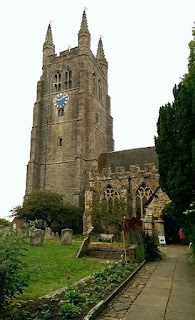 Researching your relatives is pretty easy if you're only looking back at the past hundred years or so. Thanks to online records, I've found the pub where great-granddad Richard once lived. (It's also where my grandfather lived for a while, perhaps unsurprisingly.) However, innkeeping wasn't a career that Richard followed for long. Although he was at the Black Horse in 1891, ten years later he appears to have followed his father's footsteps into the building and decorating trade.
Sometimes research can make you feel closer to your relatives. In this case, despite my proximity to the historic Richard Bridge, I'm not feeling any emotional attachment. Time to move on. I've already had a wander round the graveyard of St Mildred's church without any success, so I'm going to visit Cranbrook Road cemetery. It opened in 1887 and is at the same end of town as the pub, which fills me with some hope.
Much to my surprise, I discover a double-width plot that contains Richard, his wife Kate and two of their children. Four deaths in ten years. And a few rows back, I discover a headstone for Richard's parents, my great-great-grandmother and great-great-grandfather. A passer-by tells me that Ashford Borough Council are very good at providing information about the location of burial plots. On this occasion, I didn't need anyone else's help. I reckon that's a family trait... and maybe even the lineal connection I'm looking for.
 Researching your relatives is pretty easy if you're only looking back at the past hundred years or so. Thanks to online records, I've found the pub where great-granddad Richard once lived. (It's also where my grandfather lived for a while, perhaps unsurprisingly.) However, innkeeping wasn't a career that Richard followed for long. Although he was at the Black Horse in 1891, ten years later he appears to have followed his father's footsteps into the building and decorating trade.
Sometimes research can make you feel closer to your relatives. In this case, despite my proximity to the historic Richard Bridge, I'm not feeling any emotional attachment. Time to move on. I've already had a wander round the graveyard of St Mildred's church without any success, so I'm going to visit Cranbrook Road cemetery. It opened in 1887 and is at the same end of town as the pub, which fills me with some hope.
Much to my surprise, I discover a double-width plot that contains Richard, his wife Kate and two of their children. Four deaths in ten years. And a few rows back, I discover a headstone for Richard's parents, my great-great-grandmother and great-great-grandfather. A passer-by tells me that Ashford Borough Council are very good at providing information about the location of burial plots. On this occasion, I didn't need anyone else's help. I reckon that's a family trait... and maybe even the lineal connection I'm looking for.
Wednesday, 24 December 2014
How not to start your podcast
I’ve mentioned podcasting before, haven’t I? You see, I enjoy podcasting. And I enjoy podcasts. Some I listen to for entertainment. Some I listen to in the hope they’ll improve my own podcasting by offering tips and techniques I can borrow.
Some – like the ExtraShot podcast for video professionals – are very listenable even when you only have a very basic understanding of the subject. It offers an impressive combination of personalities and production values that kept me listening even when I had no idea what the two presenters were talking about.
And some demonstrate rather spectacularly how things shouldn’t be done.
I won’t name-and-shame the company whose podcast I’ve just heard, so let’s just say they have hundreds of employees and millions of customers. They provide a product and service that’s all about helping you store, organise and present information.
Now let’s jump straight into their latest podcast:
[theme tune, followed by brief introductions of the three presenters]
Voice 1: Those that are paying attention may notice that the last podcast was number 40.
Voice 2: No-one’s paying attention.
Voice 1: No-one’s paying attention. Someone’s paying attention. Who’s that one person, mom?
Voice 2: Not my mom. My mom gave up. She stopped listening to this. It’s true.
Voice 1: Erm. We’re now at 42 because we did record a 41…
Voice 2: …but it was lost forever.
Voice 1: It’s just on my computer…
Voice 2: Oh, it’s not lost.
Voice 1: …and all I need to do is listen to it.
Voice 3: So you will release these out of order on purpose?
Voice 1: I think that is about to happen. Although who knows when this will get released. So…
Voice 2: When did we record 41? It was like a year…
Voice 1: Six months ago.
Voice 2: Six months ago.
Voice 3: Do you have to explain the cliff-hanger then, like…?
Voice 1: You know what’s funny, though? Number 40 – because we haven’t done this in a year – number 40 was about the previous conference.
Voice 2: No way.
Voice 1: And there was a cliff-hanger at the end where we said “We just have too much stuff. We’re gonna do part 2 in the next podcast.” Then when we recorded the next podcast we didn’t.
Voice 2: We forgot.
Voice 1: Because we forgot. [Laughter] And now we’re gonna talk about this year’s conference.
I didn’t make it beyond the first couple of minutes, so the company’s 2014 conference (which took place two months earlier) remains a mystery.
Look, I understand that podcasts need personality. Yes, some of this is ‘banter’ – so let’s not take it too seriously – but it’s also being broadcast in the company’s name on the company’s web site, so I’m not going to dismiss it completely.
Ultimately, I’m left in no doubt that this particular company doesn’t have much commitment to its podcasts. And that doesn’t reflect well on its products, either.
Some – like the ExtraShot podcast for video professionals – are very listenable even when you only have a very basic understanding of the subject. It offers an impressive combination of personalities and production values that kept me listening even when I had no idea what the two presenters were talking about.
And some demonstrate rather spectacularly how things shouldn’t be done.
I won’t name-and-shame the company whose podcast I’ve just heard, so let’s just say they have hundreds of employees and millions of customers. They provide a product and service that’s all about helping you store, organise and present information.
Now let’s jump straight into their latest podcast:
[theme tune, followed by brief introductions of the three presenters]
Voice 1: Those that are paying attention may notice that the last podcast was number 40.
Voice 2: No-one’s paying attention.
Voice 1: No-one’s paying attention. Someone’s paying attention. Who’s that one person, mom?
Voice 2: Not my mom. My mom gave up. She stopped listening to this. It’s true.
Voice 1: Erm. We’re now at 42 because we did record a 41…
Voice 2: …but it was lost forever.
Voice 1: It’s just on my computer…
Voice 2: Oh, it’s not lost.
Voice 1: …and all I need to do is listen to it.
Voice 3: So you will release these out of order on purpose?
Voice 1: I think that is about to happen. Although who knows when this will get released. So…
Voice 2: When did we record 41? It was like a year…
Voice 1: Six months ago.
Voice 2: Six months ago.
Voice 3: Do you have to explain the cliff-hanger then, like…?
Voice 1: You know what’s funny, though? Number 40 – because we haven’t done this in a year – number 40 was about the previous conference.
Voice 2: No way.
Voice 1: And there was a cliff-hanger at the end where we said “We just have too much stuff. We’re gonna do part 2 in the next podcast.” Then when we recorded the next podcast we didn’t.
Voice 2: We forgot.
Voice 1: Because we forgot. [Laughter] And now we’re gonna talk about this year’s conference.
I didn’t make it beyond the first couple of minutes, so the company’s 2014 conference (which took place two months earlier) remains a mystery.
Look, I understand that podcasts need personality. Yes, some of this is ‘banter’ – so let’s not take it too seriously – but it’s also being broadcast in the company’s name on the company’s web site, so I’m not going to dismiss it completely.
Ultimately, I’m left in no doubt that this particular company doesn’t have much commitment to its podcasts. And that doesn’t reflect well on its products, either.
Friday, 24 October 2014
Philips Voice Tracer DVT6000 review
Mark Bridge writes:
If I'm interviewing someone for a podcast, I'll generally use my Zoom H4N recorder and a separate microphone or two. But I don't need the same level of high-quality kit if I'm interviewing someone for a written interview.
Of course, the H4N will do a perfectly good job with its built-in microphones. But why carry an expensive recording device when your mobile phone can do the same job? That's tended to be my perspective.
I've had the HiFiCorder Android app for a couple of years. It's a straightforward recording application that can produce a digital file for playback on my phone or PC. At least, it was, until the battery on my smartphone started to show its age. Recording an interview might mean no more phone calls for the rest of the day. Which left me wondering whether a separate digital recorder might actually be better.
With nigh-on perfect timing, I'm contacted by Philips. Would I like to review one of their new Voice Tracers?
A few days later, the Philips Voice Tracer DVT6000 arrives. It's described as the model 'for lectures and interviews', thanks in part to a three-microphone system that combines a directional central mic with omni-directional microphones on each side. Promisingly, it claims to offer up to 50 hours of battery life. I've not had that from a mobile phone since I upgraded from my Nokia 2110.
Incidentally, on the subject of historic technology, Philips founded its Speech Processing business sixty years ago and created its first digital recorder back in 1996. But I digress.
Inside the box is the DVT6000 recorder, a USB-to-microUSB lead and a pair of earphones. There's also a guarantee booklet and a quick-start guide with diagrams. The DVT6000 charges via the USB lead, so I plug it into my laptop for a couple of hours and we're good to go.
Switch on and the colour display screen springs into life. Recording and playback is very straightforward, as you'd expect from a dedicated device. You can even switch on and start recording straight away by pressing the 'record' button rather than using the lockable on/off slider on the side. Other notable physical features include a flip-out desktop stand on the underneath, sockets for headphones and external microphone, a microSD memory slot for extra storage and a 'delete' button. That's a welcome alternative to delving into a menu system when you need to remove unwanted recordings. In a remarkably simple yet clever move, the company has stored a pdf copy of the full user manual on the device; you can view it on a PC by connecting the DVT6000 via that USB cable.
Hit the record button and the device displays 'analysing distance' for a second or two. Thanks to a motion sensor and those three microphones, the DVT6000 can automatically work out how best to record your chosen sound source. A lecture may require the tutor's voice to be recorded from several metres away, so it'll focus on the central mic and ignore ambient noise from the sides, while a conventional face-to-face interview will use all three microphones. When recording starts, there's a display of recording levels, an elapsed time counter and a smaller counter to remind you how much memory space remains.
The 'AutoZoom' feature for conversation/distance recording can be switched on or off depending on your preference. Other options include the ability to filter out wind noise - useful if you're making a recording outside - and cutting down constant background noise. Both can be useful if there's nowhere quiet to chat. It's possible to start recording via a built-in timer or whenever someone starts speaking... and you can activate a pre-recording mode to ensure you never miss the beginning of a sentence.
When it's time for playback, you can transfer the audio files to your PC - but there's generally no need to do this. A built-in loudspeaker (or those supplied earphones) lets you listen to your recordings. A 'ClearVoice' function can boost quiet voices to make it easier for you to understand what they were saying. And if you do want to listen via PC, the files are recorded in mp3 format and are named with the date/time of recording, so it's easy to find the one you're looking for.
If you're serious about dictation and indexing, the DVT6000 has a few more tricks up its sleeve. Playback can be slowed down or sped up, while parts of a recording can be 'marked' with easy-to-find indicators.
It's even possible to use the device as an FM radio or a music player, with an extra option of recording from the radio if you want.
Finally, to the all-important question of recording quality. Well, the Philips Voice Tracer was significantly better than using my smartphone. I'll admit to being slightly surprised by this; I'd expected them to be evenly matched. However, the DVT6000 reproduced my interview more accurately while the phone recordings sounded more 'tinny' with noticeably less bass. And on one test, a brief hiccup in the smartphone recording - probably due to an app updating in the background - meant I lost a couple of words. Would the results from the Philips DVT6000 be good enough for a podcast interview? Under the right circumstances and in high-quality recording mode, yes.
Of course, the best audio recorder - much like the best camera - is always the one you have with you. But based on my experience, I'll be keeping the Philips DVT6000 and packing it whenever I have an interview lined up. I know I can always use my smartphone in an emergency. But I've been impressed at how well the Philips recorder does its job... and how much better it does its job than the jack-of-all-trades I usually rely on.
This article was first published on TheFonecast.com, October 2014.
If I'm interviewing someone for a podcast, I'll generally use my Zoom H4N recorder and a separate microphone or two. But I don't need the same level of high-quality kit if I'm interviewing someone for a written interview.
Of course, the H4N will do a perfectly good job with its built-in microphones. But why carry an expensive recording device when your mobile phone can do the same job? That's tended to be my perspective.
I've had the HiFiCorder Android app for a couple of years. It's a straightforward recording application that can produce a digital file for playback on my phone or PC. At least, it was, until the battery on my smartphone started to show its age. Recording an interview might mean no more phone calls for the rest of the day. Which left me wondering whether a separate digital recorder might actually be better.
With nigh-on perfect timing, I'm contacted by Philips. Would I like to review one of their new Voice Tracers?
A few days later, the Philips Voice Tracer DVT6000 arrives. It's described as the model 'for lectures and interviews', thanks in part to a three-microphone system that combines a directional central mic with omni-directional microphones on each side. Promisingly, it claims to offer up to 50 hours of battery life. I've not had that from a mobile phone since I upgraded from my Nokia 2110.
Incidentally, on the subject of historic technology, Philips founded its Speech Processing business sixty years ago and created its first digital recorder back in 1996. But I digress.
Inside the box is the DVT6000 recorder, a USB-to-microUSB lead and a pair of earphones. There's also a guarantee booklet and a quick-start guide with diagrams. The DVT6000 charges via the USB lead, so I plug it into my laptop for a couple of hours and we're good to go.
Switch on and the colour display screen springs into life. Recording and playback is very straightforward, as you'd expect from a dedicated device. You can even switch on and start recording straight away by pressing the 'record' button rather than using the lockable on/off slider on the side. Other notable physical features include a flip-out desktop stand on the underneath, sockets for headphones and external microphone, a microSD memory slot for extra storage and a 'delete' button. That's a welcome alternative to delving into a menu system when you need to remove unwanted recordings. In a remarkably simple yet clever move, the company has stored a pdf copy of the full user manual on the device; you can view it on a PC by connecting the DVT6000 via that USB cable.
Hit the record button and the device displays 'analysing distance' for a second or two. Thanks to a motion sensor and those three microphones, the DVT6000 can automatically work out how best to record your chosen sound source. A lecture may require the tutor's voice to be recorded from several metres away, so it'll focus on the central mic and ignore ambient noise from the sides, while a conventional face-to-face interview will use all three microphones. When recording starts, there's a display of recording levels, an elapsed time counter and a smaller counter to remind you how much memory space remains.
The 'AutoZoom' feature for conversation/distance recording can be switched on or off depending on your preference. Other options include the ability to filter out wind noise - useful if you're making a recording outside - and cutting down constant background noise. Both can be useful if there's nowhere quiet to chat. It's possible to start recording via a built-in timer or whenever someone starts speaking... and you can activate a pre-recording mode to ensure you never miss the beginning of a sentence.
When it's time for playback, you can transfer the audio files to your PC - but there's generally no need to do this. A built-in loudspeaker (or those supplied earphones) lets you listen to your recordings. A 'ClearVoice' function can boost quiet voices to make it easier for you to understand what they were saying. And if you do want to listen via PC, the files are recorded in mp3 format and are named with the date/time of recording, so it's easy to find the one you're looking for.
If you're serious about dictation and indexing, the DVT6000 has a few more tricks up its sleeve. Playback can be slowed down or sped up, while parts of a recording can be 'marked' with easy-to-find indicators.
It's even possible to use the device as an FM radio or a music player, with an extra option of recording from the radio if you want.
Finally, to the all-important question of recording quality. Well, the Philips Voice Tracer was significantly better than using my smartphone. I'll admit to being slightly surprised by this; I'd expected them to be evenly matched. However, the DVT6000 reproduced my interview more accurately while the phone recordings sounded more 'tinny' with noticeably less bass. And on one test, a brief hiccup in the smartphone recording - probably due to an app updating in the background - meant I lost a couple of words. Would the results from the Philips DVT6000 be good enough for a podcast interview? Under the right circumstances and in high-quality recording mode, yes.
Of course, the best audio recorder - much like the best camera - is always the one you have with you. But based on my experience, I'll be keeping the Philips DVT6000 and packing it whenever I have an interview lined up. I know I can always use my smartphone in an emergency. But I've been impressed at how well the Philips recorder does its job... and how much better it does its job than the jack-of-all-trades I usually rely on.
This article was first published on TheFonecast.com, October 2014.
Friday, 19 September 2014
Childhood dreams
Barry Manilow being interviewed by Kirsty Young on BBC Radio 4's Desert Island Discs in September 2009.
"My theory is that we all wind up doing what we were safest with when we were about thirteen to fifteen. I was comfortable making music and I felt safe then."
Thursday, 18 September 2014
The reluctant interviewee
Artist Edward Burra is being interviewed by Carole Smith for an Arts Council film that was released in 1973:
"Do you think you're clever at fending questions off?"
"Hmm. Seem to be fairly, one way and another, don't you think? You do? Mmm."
"Would you say you were a difficult person to interview?"An audio clip can be found on BBC Radio 4's Great Lives programme from September 2014.
"I should say so. I'm not very forthcoming, I don't think."
Subscribe to:
Posts (Atom)